Our Disciplines
Data engineering and analytics infrastructure
Data engineering is the plumbing between the systems that produce data and the people who need to act on it: pipelines, storage, transformation and the tests that tell you when a number is wrong.
Most reporting problems are not dashboard problems. They are pipeline problems wearing a dashboard, and that is the layer we work at.
What you get
- Data pipelines
- Ingestion from your applications, databases and third-party services, scheduled and monitored so failures are noticed by the system rather than by an executive.
- Warehouse modelling
- A warehouse structured so that a question has one answer, with the transformations version-controlled and reviewable.
- Data quality testing
- Automated checks on freshness, volume and consistency. A silently wrong number is more expensive than a missing one.
- Analytics enablement
- Clean, documented models your analysts and BI tools can build on without reverse-engineering the source systems each time.
- Migration and consolidation
- Moving off spreadsheets, legacy warehouses or scattered exports into something maintainable, without losing history.
Technologies we work in
What comes up most often — not a boundary. Teams are assembled per engagement, so we staff for the stack your project actually uses.
Warehouses
Pipelines
Streaming
Analytics
How we work
-
Map the sources
Where data comes from, how reliable each source is, and which questions actually need answering.
-
Model deliberately
Warehouse structure decided before pipelines are written, so the transformations have somewhere coherent to land.
-
Build the pipelines
Version-controlled, tested and scheduled, with failures that alert rather than pass silently.
-
Test the data
Quality checks on the values themselves, not just on whether the job exited zero.
-
Enable the consumers
Documented models and handover to the analysts and tools that depend on them.
Senior engineers, in your time zone
There is no junior bench here, so there is nobody to rotate onto your work to keep a seat warm. And because the team works from Argentina, you get a full working-day overlap with North America — questions get answered the same day, not the next one.
Work we can show you
-
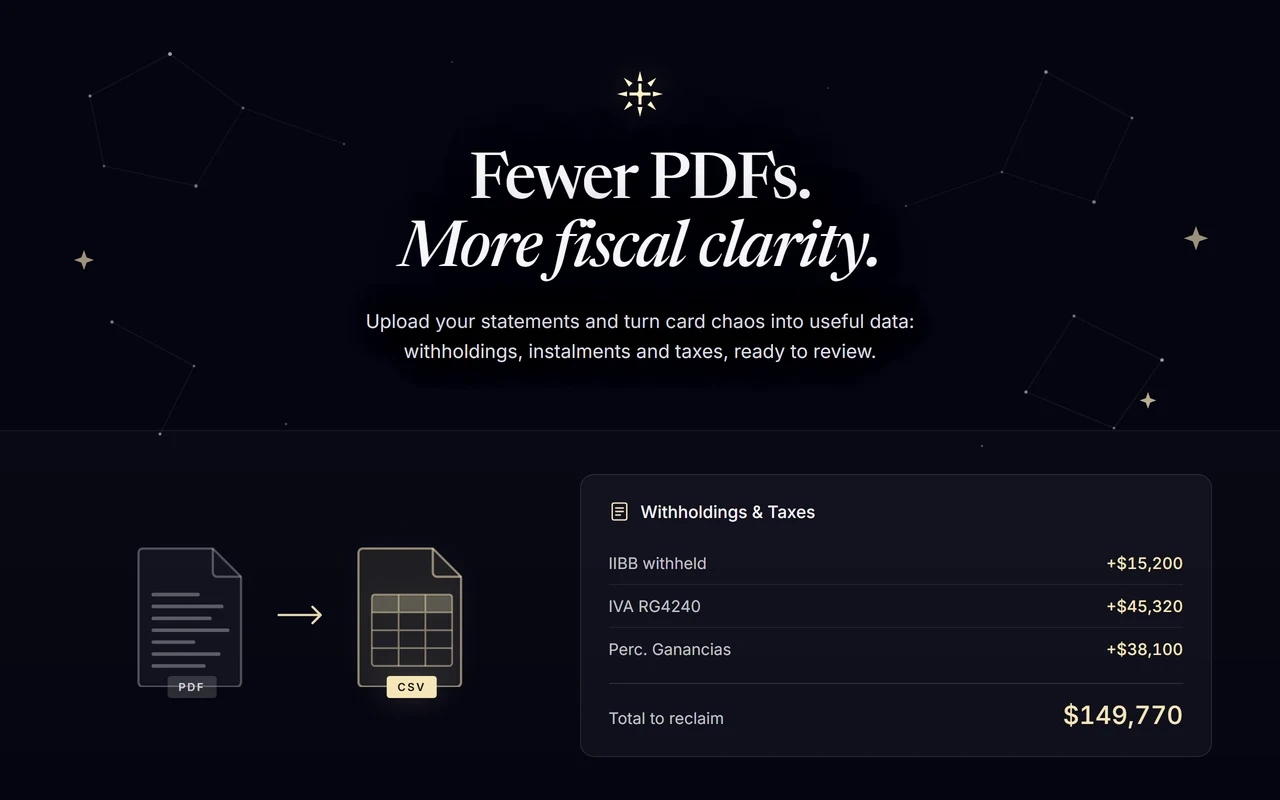
Antü
A fiscal clarity tool for Argentina. It reads credit-card statement PDFs and turns them into structured data — instalments, withholdings and tax totals ready to review, instead of a folder of statements nobody reconciles.
Visit antu.ar -
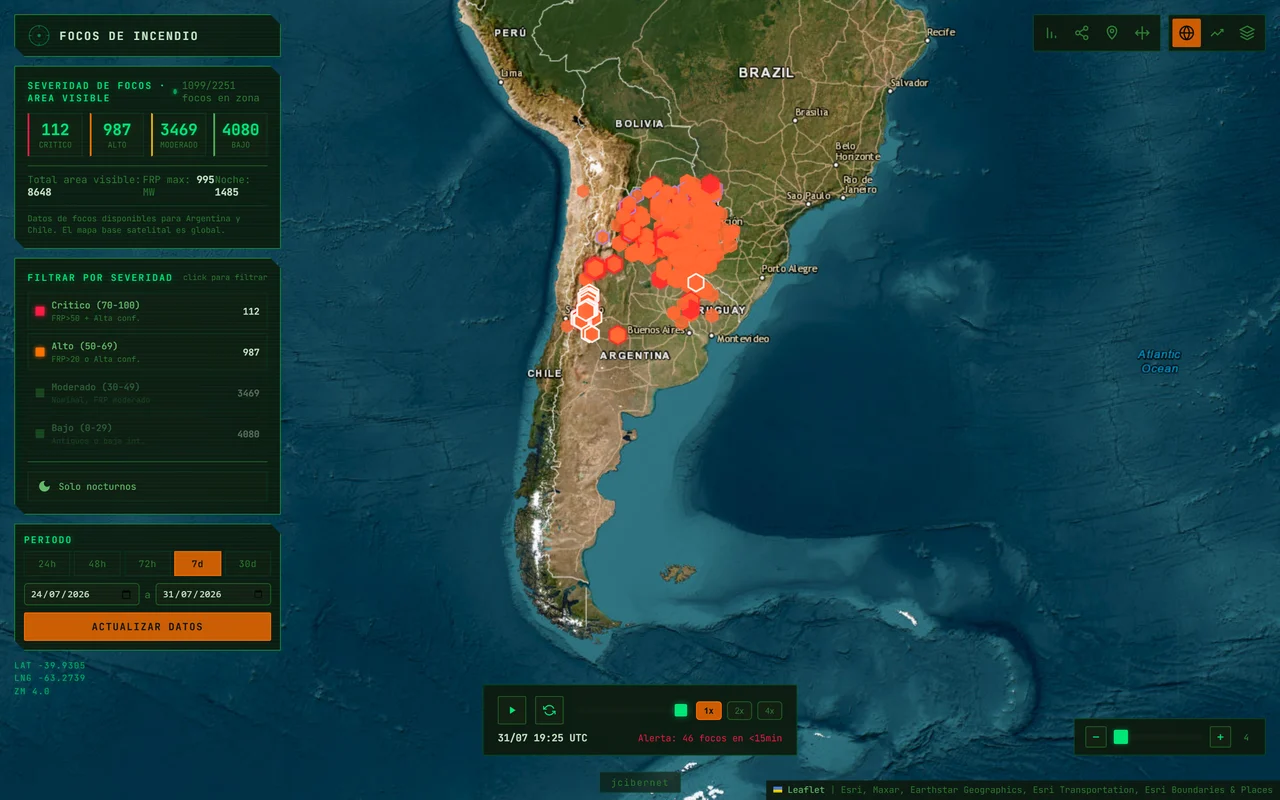
Patagonia Fires
A live wildfire map for Argentina and Chile, built on NASA FIRMS satellite detections. Filters hotspots by intensity, time window and proximity to roads, so responders can read a fire front rather than a table of coordinates.
Visit patagoniafires.org
Common questions
We already have dashboards nobody trusts. Where do you start?
Usually by tracing two or three important numbers back to their source. That normally locates the real problem quickly — and it is rarely in the dashboard.
Do we need a warehouse, or is our database enough?
Plenty of companies are well served by reporting off a replica for longer than the tooling market suggests. We will tell you when you have actually outgrown that, rather than selling you a platform you are not ready to operate.
Who actually works on my project?
Senior engineers, every time. WizardsLabs has no junior bench to keep busy, so there is no one to rotate onto your work to fill a seat. Each engagement is staffed with hand-picked engineers matched to what you are building.
How does the time-zone overlap work?
The team works from Argentina, which sits within one to three hours of US Eastern for most of the year and keeps a full working-day overlap with every North American time zone. Stand-ups, pairing and same-day answers all happen in normal business hours for both sides — not at the edges of the day.
Can you work with our analysts?
Yes, and it works best that way. Analysts know which numbers matter; we make those numbers dependable and easy to query.